Raising Hell: QandA: What The Hell Is It Like To Actually Investigate A Cold Case?
"I believed wrongly that there was integrity and a moral fibre in the top structure. But it seems that I was wrong," Eugene de Kock, former South African police colonel and assassin, 1 October 1997.
From the crowds that would gather to watch the execution of criminals, to the re-runs of Cops you may have caught while somewhat intoxicated at an ungodly hour of the morning, it is fair to say that crime has a vice-like grip over the human imagination. A whole industry has been built around the subject, repackaging the violence, the personalities and the context behind the worst violations of human norms and serving them up in the form of tabloid newspapers, True Crime fiction and even children’s bedtime stories.
Many of us, if we are being honest, will have at some point taken it a step further and openly fantasised about what it may be like to solve a mystery. This is not such a bad thing. The idea of playing detective and fitting together disparate facts to converge on the truth speaks to our shared belief in hope and rationality — values that often seem in short supply these days. The problem is when this romanticism spills over into real life and people forget the awesome responsibility owed to those who have lost someone — or the enormous personal toll this work takes on those who do it.
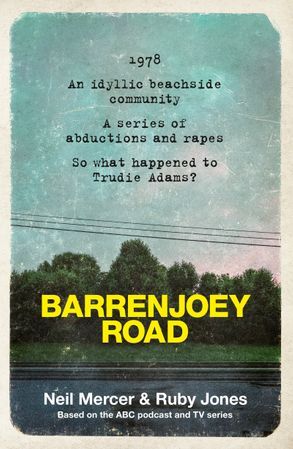
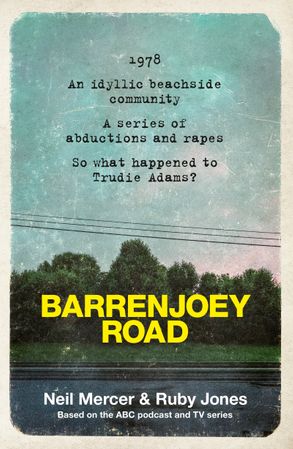
Ruby Jones is one such person whose work led them to investigate a mystery and she will be the first to tell you — it ain’t easy. An award-winning investigative journalist, documentary host and personal friend, when I heard she had co-written a new book out through Harpers Collins about the disappearance of Trudy Adams, I messaged her to talk about her work, crime reporting and trauma.
This QandA has been lightly edited for length and style.
Royce Kurmelovs: Can you talk a little about the work you did investigating the cold case at the heart of your book?
Ruby Jones: Well, before the book there was a TV and podcast series (Unravel: Barrenjoey Road). While I was making that series, a source gave me a copy of the full brief of evidence from the inquest into the disappearance of Trudie Adams in June 1978. Suddenly I had thousands of pages of documents — including the police reports from the day Trudie went missing, witness statements, and photographs of exhibits. I thought I needed to make sure this all went on the public record, so the book began there. The other thing that happened is that after the ABC series aired, people started to come forward with new information about the case. Getting access to original documents in a 40 year old cold case is pretty rare. I was totally blown away when I was given them — the level of detail is incredible, and totally invaluable. It meant that instead of relying on people’s memory from decades ago, I had statements in black and white from the day that I could actually check. And when people — including someone very close to the main suspect — chose to contact me after seeing the ABC series, it felt like a big deal. I remember thinking maybe they knew something that could shift things, maybe they could shed some light on what happened. So I spent a lot of time sifting through that, and conducting new interviews.
RK: Crime reporting gives you incredible access to the intimate details of a person’s life, and sometimes, their final moments. How do you think about this responsibility?
RJ: The responsibility weighed on me heavily. I thought a lot about the level of detail to include in the book, particularly when it came to sexual assault. I didn’t want anything in the book to be sensationalist or graphic. But some level of detail needed to exist, in order to try and establish whether there was a pattern to certain crimes, and whether one person was behind them. So I was really weighing that up — the intimate details that did and didn’t need to be included, and the most sensitive way to handle it. One thing that I did carry with me throughout writing this book was the wellbeing of Trudie’s friends and family, and the women who were attacked. Every time I made an editorial decision about this book, I had them in mind. I wanted anything that I wrote to be respectful to them.
RK: There is a tendency to think of traumatic events as ending when the crisis that created them resolves. In reality, the effects tend to linger – and especially so where you are retracing an event to investigate or write about it. What is it like to wade into a traumatic event that has long passed?
RJ: For those who knew and loved Trudie Adams, the trauma of her disappearance is still so deep and so present. When you haven’t been able to get any answers, or any closure, then 40 years doesn’t really mean anything. The pain is not in the past, it’s in the present. I think that kind of trauma is something I was aware of in an intellectual sense before starting this project, but I didn’t understand it emotionally until I was deep in the reporting of it. I have nothing but respect for the people who year in, year out, carry that pain, and continue to speak about their loved ones, despite how difficult it is to do so. As to say what it's like to wade into a traumatic event like this from decades ago — it’s fraught, and I don’t know if I would do it again.
RK: Our industry, somewhat infamously, doesn’t handle secondary trauma well. What do you make of that?
RJ: There is still this very old-school culture in journalism, where it’s seen as weak to let a story affect you. Working on this project made me fundamentally reassess whether or not I want to do this kind of work. I love journalism, but I didn’t know how to protect myself while doing it, and that had a pretty big impact on my life. It was scary because this kind of thing is not really talked about openly within the journalism world — so I thought I must be weak or bad at my job. I now know there are so many journalists walking around with PTSD or vicarious trauma. But when we don’t talk about it, we leave people thinking they have to deal with it alone, and we add shame into the mix too. The industry is going to have to grapple with this at some point — if not from a moral point of view, then a legal one. There are many newsrooms failing in their duty of care, and the courts are beginning to find them responsible.
“I love journalism, but I didn’t know how to protect myself while doing it, and that had a pretty big impact on my life.”
RK: I know that in writing this you became deeply uncomfortable with True Crime as a genre. Why?
RJ: After spending so much time with people’s pain, it becomes difficult to see how anyone could see it as entertainment. I do think there is value in crime reporting — especially if you’re able to draw links between crime and corruption, or bring new understanding to a situation. At it's best, crime reporting can reveal important things about racism, sexism, and structural injustice. At its worst, it reinforces those prejudices, and causes harm to the people involved. So I think we should think extremely carefully about why we’re telling a crime story before we do it. There’s a lot of journalism hubris out there, journalists who think that they can help ‘solve’ a case — and that overconfidence is one of the worst and most damaging aspects of the industry I work in.
RK: How do we make crime reporting better?
RJ: For starters we need to make sure we’re more representative of the communities we’re covering. The media industry is exceptionally white and mostly middle and upper class which means there are a lot of uninterrogated biases and harmful stereotypes that are reproduced. I think this applies to the whole journalism industry in Australia, but is especially stark with crime reporting. The other thing I’d like to see more of is a framework for trauma-informed reporting. We’re starting to see some resources for this sort of thing in the US, but it's yet to translate here in Australia. “Trauma-informed reporting” means that we as reporters would do things like make sure a source knows what to expect, give them a way to have some editorial control over their story, and not over-inflate our capacity to help them.
RK: Beyond crime reporting, one of the issues you uncovered were instances of corruption. Could you talk a little about that?
RJ: Yes, so the main suspect in the disappearance of Trudie Adams is also suspected of multiple other crimes, including at least 14 abductions and sexual assaults, and two other disappearances. Yet he lived most of his life without being questioned over any of those crimes. He also had a close relationship to a corrupt former law enforcement officer, who is currently in jail — on unrelated charges. So a large part of my investigation was about trying to untangle that relationship. The law enforcement officer was very high up at the time, in fact he is considered one of the highest ranking law enforcement officials to be jailed — on attempted drug importation charges. So there were these really fundamental questions about corruption that dogged this case that I wanted to answer.
“My sense is that things that might have shocked us decades ago are par for the course now.”
RK: What has it taught you about the relationship to corruption within Australian institutions?
RJ: I think things have changed — there are a lot of things that I don’t think you could get away with any more. There are systems in place to document what’s going on, so I’d say there is probably less casual corruption within institutions like the police force, public service, and politics. On the other hand, in some ways I think corruption might even be worse — or more sophisticated — now than it was 40 years ago. My sense is that things that might have shocked us decades ago are par for the course now. We’ve gotten used to a level of self-interest from those in power, so when a scandal breaks, we don’t necessarily expect an apology or a resignation any more, we just move on.
That means that ultimately no one is held accountable, and there is this slow but very real erosion of trust in institutions. If we don't see consequences for those who are found to have rorted the system, or cheated, or covered something up, then that kind of thing only becomes more common. Why wouldn't it, if people feel that they can get away with it? So it becomes this self-perpetuating idea as we come to expect it. We go from not trusting an individual who has done something wrong — for example one corrupt politician — to not trusting a whole profession of individuals — all politicians are bad — to not trusting an entire institution — democracy. And that's when it becomes truly dangerous.
RK: Who pays the price for this corruption?
RJ: Well, corruption serves to make those who already have power more powerful. And in Australia, that means rich, white and manipulative men. I’d say it's the rest of us who lose out — because we start to lose faith in the systems we hoped would protect us.
Before You Go (Go)…
- Are you a public sector bureaucrat whose tyrannical boss is behaving badly? Have you recently come into possession of documents showing some rich guy is trying to move their ill-gotten-gains to Curacao? Did you take a low-paying job with an evil corporation registered in Delaware that is burying toxic waste under playgrounds? If your conscience is keeping you up at night, or you’d just plain like to see some wrong-doers cast into the sea, we here at Raising Hell can suggest a course of action: leak! You can securely make contact through Signal or through encrypted message Wickr Me on my account: rorok1990.
- And if you’ve come this far, consider supporting me further by picking up one of my books, leaving a review or by just telling a friend about Raising Hell!