Raising Hell: Issue: 83: Trapped in the perpetual present
'God gave me my money,' John D Rockefeller, Women's Home Companion (1915), quoted in God's Gold (1932).
Australia, I don’t think it is controversial to say, is a place that generally encourages people to forget history. Remembering stuff can be a little awkward at the best of times, like when the grandkids learn the grandparents were racist. Worst case scenario, this sort of thing may even upend a cherished cornerstone of the legal system and call into jeopardy the idea that Europeans had a God-given right to exploit every last inch of the landmass that today constitutes Australia.
The problem, I guess, is that the focus of so many of these conversations is on who did what, when and why. In the context of an ongoing event, issue or phenomenon — such as, I don’t know, climate change — these are the sorts of questions that are very uncomfortable, mostly because they are a buzzkill. When you’re talking about a $16.5bn gas development off the country’s north coast, you want to be popping Champaign, not taking questions from people who keep asking about what your predecessor’s predecessor did back in the 70s because of how it exposes your organisation to hundreds of millions in legal liability. That’s what professionals call “a bummer”.
This is something I’ve been thinking about in the context of climate accountability in journalism. There is an old adage that news doesn’t work backwards. This is true, but it’s also true that here in Australia, conversations about climate change — as climate transition’s historian Dr Marc Hudson said when he spoke to me for my upcoming book Slick — tend to get stuck in the “perpetual present”. The focus on wonkery and the cut-and-thrust of political manoeuvring tends to miss the forest for the trees — like finding a corpse but failing to ask who cut its throat.
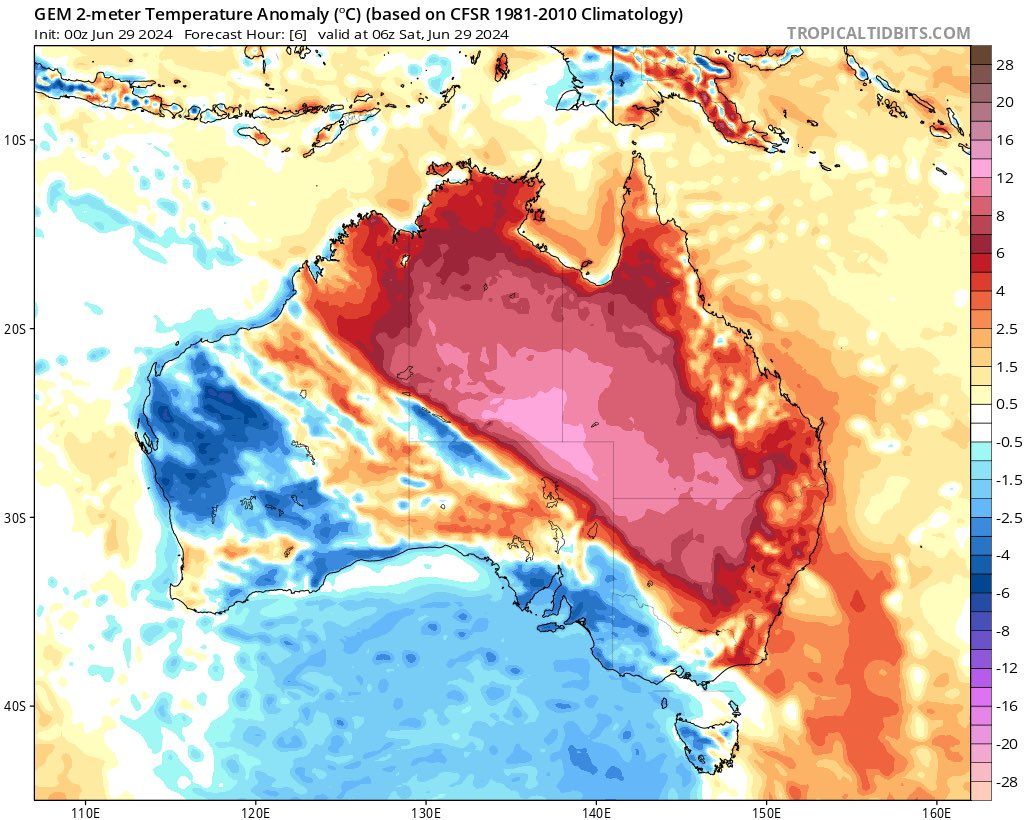
In the films, this kind of thing usually ends with a murderous raptor hunting children for sport. In real life, this tends to result in hot winters, hotter summers, devastating bushfires and, every now and then, persistent catastrophic flooding.
Digging into the past in this way has social, political and legal implications on issues active in the present. If the oil and gas industry, for instance, were aware there was a risk that continuing to burn fossil fuels might upset the chemical composition of the atmosphere but went ahead and did their thing anyway, that’s going to be a problem when the consequences start being felt. If those same people were then shown to have lied about the realities climate change, that is going to be a prickly problem when oil and gas companies try to convince the public that they are “part of the solution”.
Asking these kinds of questions also has a way of getting people wondering what a judge might say. Australian courts, for instance, recognise that there exists a duty of care in certain situations. Where people were aware that what they were doing might cause harm, and they went ahead and did it anyway, those people have done a negligence. Where someone is found to have done a negligence, they generally have to shell out a few bucks to make things right.
There are also very strict provisions in Australian corporate law that forbid companies from lying for money. Being found by a court to have mislead the public has consequences beyond the court system — there’s a reason why someone who works in the tobacco industry today may lie about what they do for a living at parties. So much of the oil and gas business is bound up in the idea of “social licence” — the extent of nearby communities and national populations to tolerate, and actively support, drilling activities — that this is actively factored into risk analysis when companies are deciding whether to go ahead on a project.
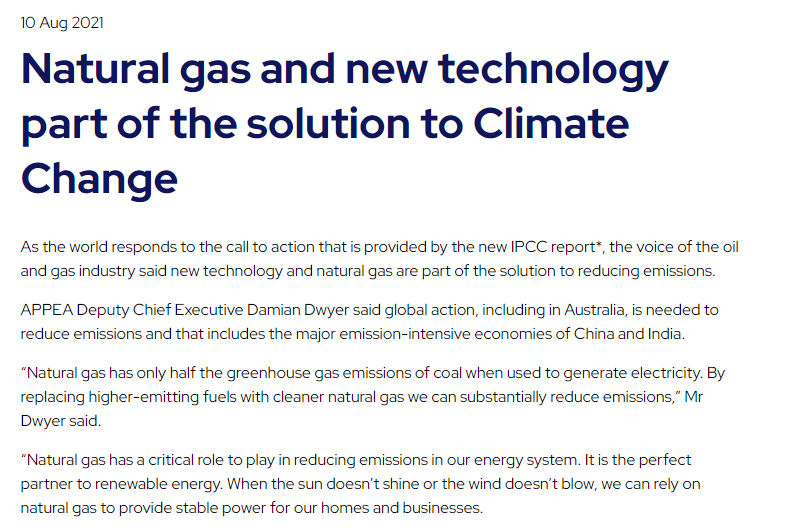
If people learn to stop uncritically assuming what these companies were saying to be true, our political representatives might also follow suit, which in turn might prompt some more uncomfortable questions in forums where the executives may not otherwise like to answer those questions. In fact, it may even create the social conditions necessary to compel political leaders to actually phase out coal, oil and gas.
The easy objection to this is to say: “Yeah, but didn’t we already know that oil companies are bad dudes?” And, yeah, sure. People generally know that burning oil, gas and coal causes climate change at this point. Most will have heard some variation of the idea that “Exxon Knew”. Most, however, don’t know the specifics or the extent to which these companies used their power, wealth and influence to make a fortune at our expense. It’s one thing to say that climate change is happening and that we need to transition; it’s another to go back over old industry documents and see the very people who caused this harm say the same in the 70s.
Australians, generally, aren’t encouraged to remember the past for fear of what it might mean today — and in that context, that is also why this work is very much news.
For the period of 18 June to 2 July…
Reporting In
Where I recap what I’ve been doing this last fortnight so you know I’m not just using your money to stimulate the local economy …
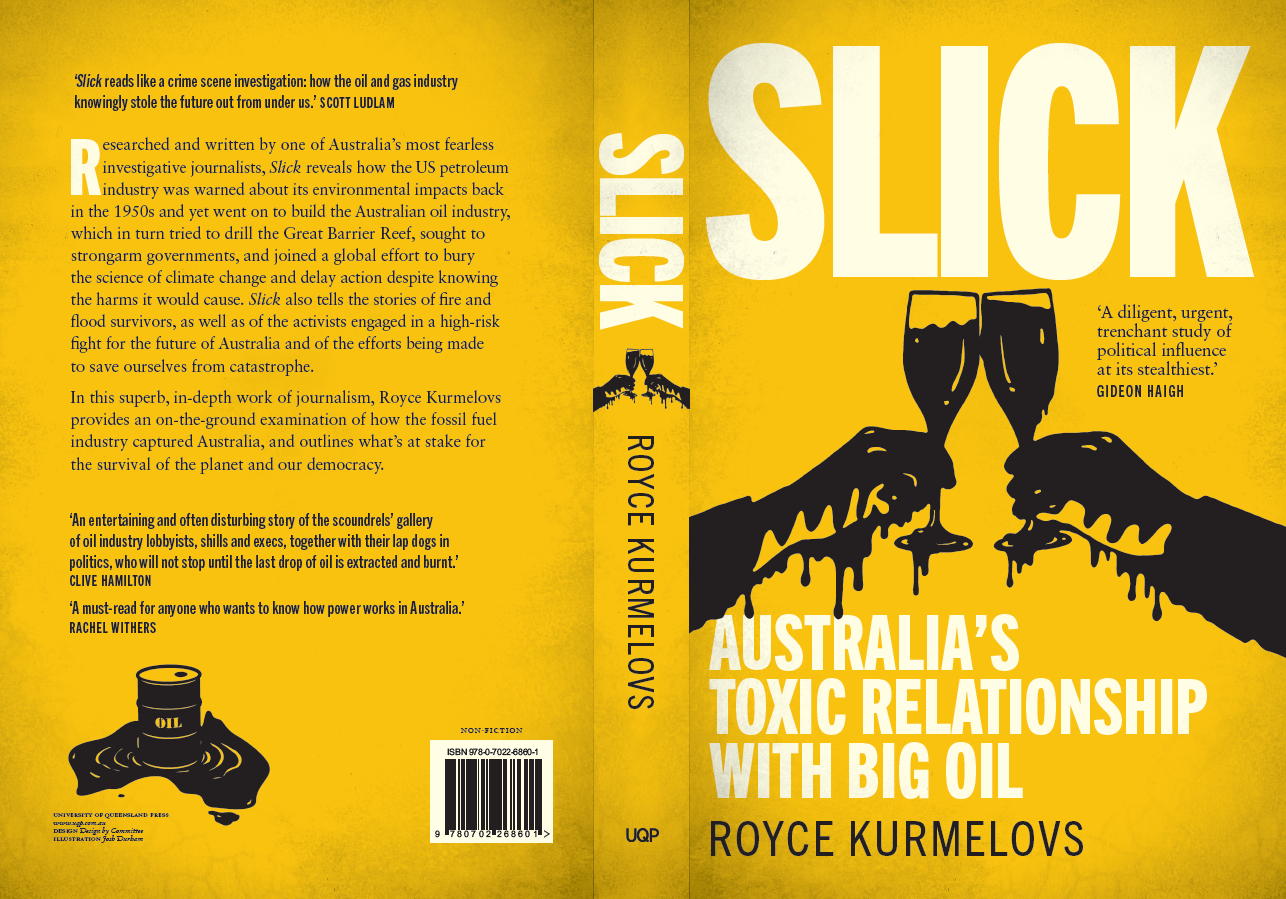
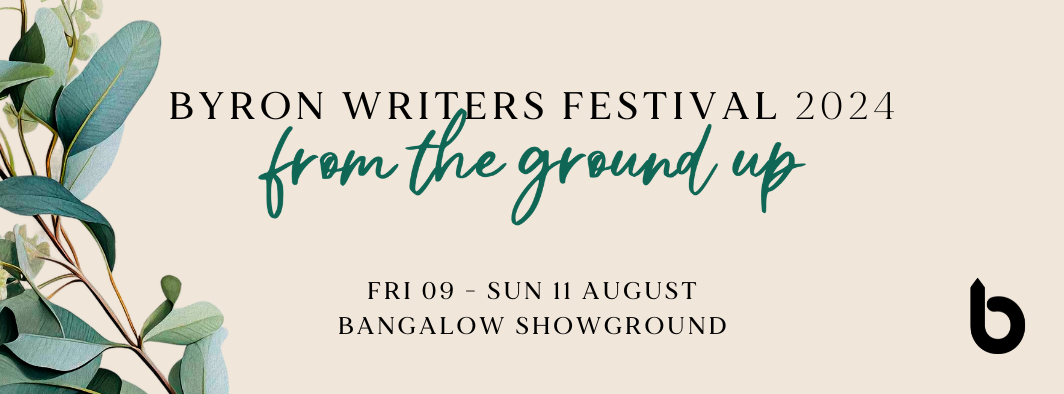
BOOK LAUNCH: I’ll be launching my upcoming book Slick at Bryon Writers Festival 2024 in August. I have it on good authority that the launch will be open to the public, so if you’re in the Northern Rivers area, swing by! Full program information here.
But that is not the only thing: you can also catch me in conversation with climate scientist Joelle Gergis, author of a quarterly essay, Highway To Hell where we’ll be talking about the end of fossil fuels in Australia. You’ll find ticketing information here and session details here.
And that’s still not the end, because there is now an events page up at www.slickthebook.com.au. I’m currently looking at a couple of online events, and in-person events in Adelaide, Canberra, Darwin and few others — so check back regularly as the page will be updated as new events are locked in.
This last fortnight I pitched and filed a longread titled How Fossil Fuel Companies Taught Australian’s To Love Gas. I’ll report back when the publication day is locked in, but the important thing to know is that this was produced with the generous support of Raising Hell’s paying subscribers, who helped cover the costs for me to travel to visit the necessary archives — and to pull some old footage out of cold storage to have it digitised.
Byron Bay is to be stripped of its nudist beach – and naturists blame ‘conservative creep’ (Guardian AU, 30 June 2024).
Before You Go (Go)…
- Are you a public sector bureaucrat whose tyrannical boss is behaving badly? Have you recently come into possession of documents showing some rich guy is trying to move their ill-gotten-gains to Curacao? Did you take a low-paying job with an evil corporation registered in Delaware that is burying toxic waste under playgrounds? If your conscience is keeping you up at night, or you’d just plain like to see some wrong-doers cast into the sea, we here at Raising Hell can suggest a course of action: leak! You can securely make contact through Signal — contact me first for how. Alternatively you can send us your hard copies to: PO Box 134, Welland SA 5007
- And if you’ve come this far, consider supporting me further by picking up one of my books, leaving a review or by just telling a friend about Raising Hell!