Issue 113: The MACH Energy Freakout
"I bring out the worst in my enemies, and that’s how I get them to defeat themselves." - lawyer, prosecutor and conservative political activist, Roy Cohn, as spoken to William Safire, 4 August 1986.
News of the High Court decision concerning the Mount Pleasant coal mine in New South Wales hit like a bomb during the pre-COP meeting in Fiji. It had been a low-profile legal action attempting to stop a coal mine over concerns about the carbon emissions it would create. Much like those before it, most rated its prospects of success as "believe it when we see it".
When the High Court ruled three-to-two in favour of the applicants, it made headlines right as the Australian government was busy telling its neighbours how it was doing great things on climate change in Fiji. The decision was straight forward. Essentially, the High Court was asked to read New South Wales planning laws and interpret what they said. That's it. In this particular case, it read them and found in a three-two decision that, yes, planning authorities in the state were required to consider how they might limit the pollution that would be created when the coal was burned. Authorities, however, did not do this.
Zooming out, here was a court affirming the letter of the war and, by implication, asking the authorities to go back and do their job. In principle, the Australian government is acting on climate change. This should be a good thing, right? Wrong. Almost immediately after the decision fossil fuel producers and their allies began to kick up a fuss. For years their argument has been they can't be held responsible in the same way gun manufacturers have argued they're not responsible if someone goes on a killing spree. When trying to measure the pollution of an industrial operation, Scope 1 emissions refer to every direct source of carbon pollution within that business—the trucks, the power, the worker accommodation. Scope 3 emissions measure the pollution created when oil, gas and coal is burned somewhere else, by someone else. The industry position has long been that their Scope 3 emissions are someone else's Scope 1 emissions, and therefore not their problem. In fact, here is former Woodside boss Meg O'Neill saying just that in 2022 during a panel discussion at the national oil and gas conference:
"Scope three is probably one of the biggest challenge areas for us as an industry, and if you think about scope three, if you think about the way Paris is designed, Paris says, you know, there's 197 nations around the world, all of which have to take responsibility for their own actions, uh, so my Scope 3 is my customer's Scope 1."
As a result, the High Court ruling scared the chooks. As soon as the decision dropped, the Minerals Council of Australia went into a full freak out, warning gravely about "sovereign risk" from "lawfare" by dastardly activists. Lobby groups calling on government to legislate and snuff out the decision—because when industry loses it pushes to rewrite the rules in its favour. The New South Wales Labor government, for its part, issued a statement that may as well have been written by a lobby group.
"Coal has underpinned the state's economic prosperity for generations, powering industry and supporting regional communities," it said. "It will continue to play an important role in NSW for decades to come."
When Climate Change and Energy Minister Chris Bowen was asked about the decision on the final day of pre-COP in Fiji, he had no comment except to say, in a frustrated tone, that a decision of the High Court was the law of the land. To date, the Australian government has appeared to maintain a policy of refusing to talk to the Australian public about significant decisions concerning climate change. It has been a year since the International Court of Justice delivered its advisory opinion on the obligations of states in respect of climate change. This decision found that countries like Australia may be sued by other states for continuing to permit new oil, gas and coal projects that drive climate change.
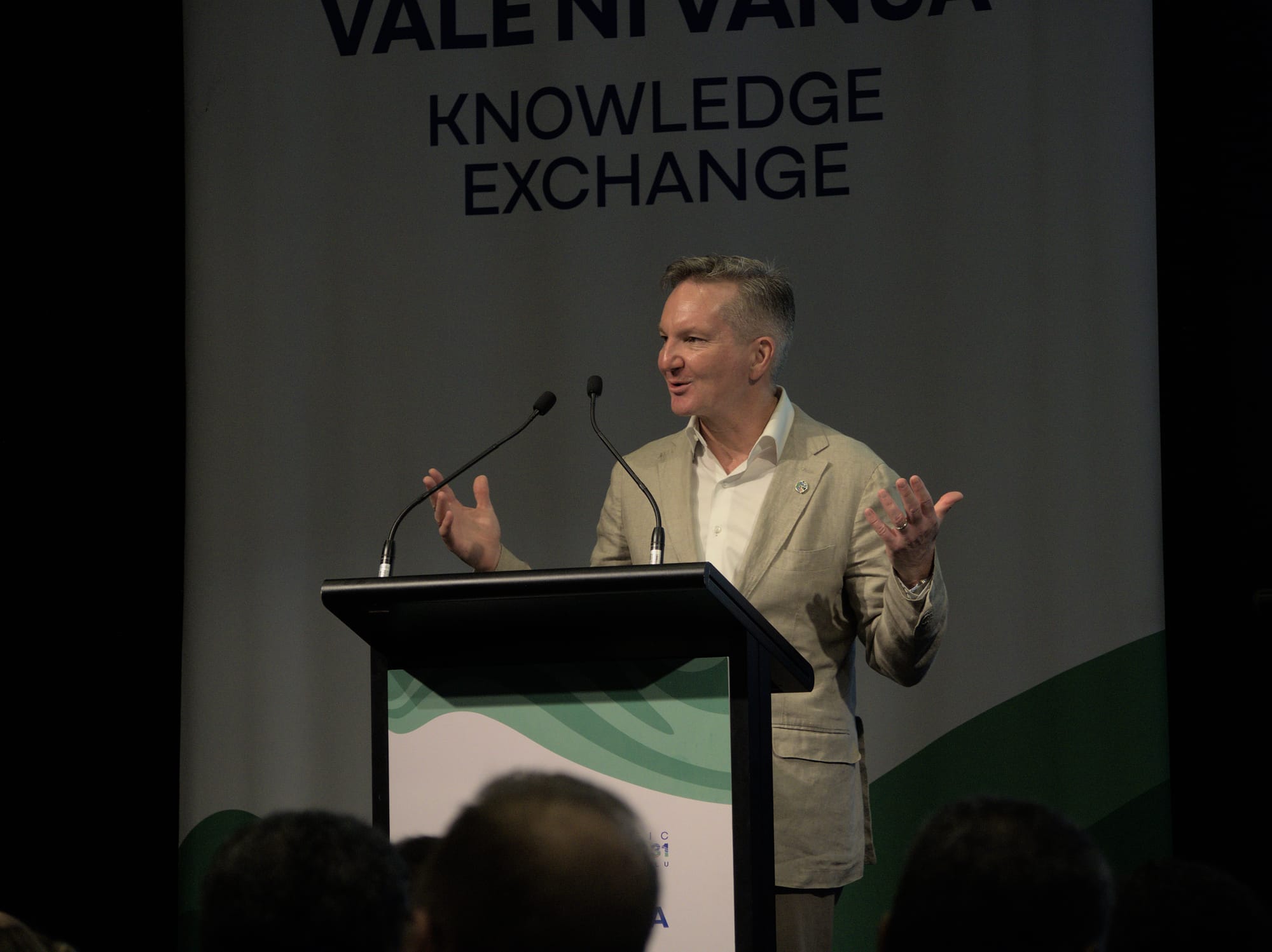
Bowen's silence was, however, perhaps the wise political move given how hard industry and the New South Wales state government were hyperventilating at that moment. The catch is that the extent of this freakout speaks to just how terrified Australian authorities and business are of climate litigation. In this particular case, the High Court did not touch on the potential liability of the coal mine operator for potential harms caused by its contribution to climate change—something that is becoming increasingly easy to measure—but their reaction suggests they know it is coming. Next door in New Zealand, the courts departed from a long-standing policy to allow Maori man Mike Smith to sue companies for damages caused by their historical emissions. In response, the national government introduced a world-first liability shield to stop anyone suing any major emitter for anything.
Here in Australia, things are not quite at that stage yet but the politics are clearly on the same path. On Monday, the NSW Premier Chris Minns announced his government would step in to institute a "jobs guarantee" for workers at the mine. In a press release the Premier said his government would introduce a bill in the next two weeks that would give a jobs guarantee to the workers at the moment. No further detail, let alone a draft, was provided in the announcement, well-timed for a prominent Monday headline. At best the implication was the state government would insure the salaries of 400 workers on the basis their families needed "certainty".
“Our commitment to tackling climate change hasn’t changed, but neither has our commitment to protecting working people," Minns said. “We have a responsibility to cut emissions and make sure there are good jobs in the years ahead, but we can't turn our backs on the workers and families who rely on these jobs today.”
As friend of the newsletter Michael Mazengarb (you can find his newsletter here) neatly put it in a post to social media: there is nothing like watching the NSW government "protect" a proposed coal mine expansion from the operation of its own planning laws. More than that, the act speaks to a feeling that is broader than this one incident and issue. Over the last ten-to-fifteen years, Australians had to fight hard to make their country better. Recently, it has felt like the reaction is on. Everyone who had a stake in the way things have always been done have managed to put the brakes on. This is true across climate, immigration, media—pretty much every significant issue going forward. And with the barbarians at the gate and elections on their way, we're about to find out just how far certain interest groups in this country will go to make sure nothing, ever changes.
Good Reads
Because we here at Raising Hell know how much you love homework…
- Daniel Hurst writing in his newsletter has catalogued the results of his investigations into the sudden decision to take-up the AUKUS alliance and bind Australia to the United States that is worth a read.
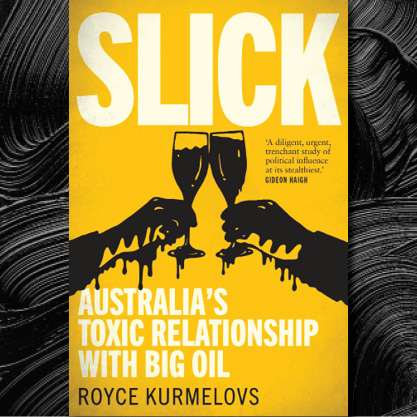
"Many books about climate change are worthy but dull. Slick, however, is as readable as it is shocking." - Richard Denniss, The Australia Institute, writing in The Conversation.
Reporting In
Where I recap what I’ve been doing this last fortnight so you know I’m not just using your money to stimulate the local economy …
- 'The corporate faces bankrolling One Nation's 'anti-establishment' surge' (Deepcut, 20 October 2026).
- As of 6 November 2026, I will be on the road to Antalya, Turkey for COP31. I was in Fiji for pre-COP and have a piece coming in Drilled as a scene setter. I'll be notionally filing for Drilled and RenewEconomy while on the ground—and anyone else who will have me. I look forward to publishing at least one update while on the road, though that may get complicated so I apologise if the regular schedule gets put out.
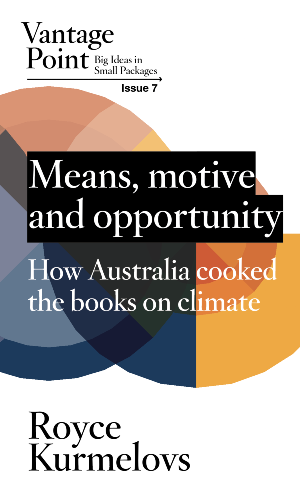
- 9 November 2026: I have a new essay, Means, Motive and Opportunity, out through The Australia Institute's Vantage Point series. Pre-orders and sales in the first couple of weeks help make or break a project. Get yours here.
- February 2027!: I'll have ANOTHER essay out with Monash University Press looking at One Nation. Stay tuned for more.
Before You Go (Go)…
- Want to get in touch? Message me on Signal at username RoyceK.11. Alternatively you can send hard copies to: PO Box 134, Welland SA 5007
- And if you’ve come this far, consider supporting me further by picking up one of my books, leaving a review or by just telling a friend about Raising Hell!