Issue 110: Australia's Climate Contradiction
"A sincere diplomat is like dry water or wooden iron," - Joseph Stalin, Georgian Revolution and Soviet dictator, speech, "The Elections in St. Petersburg", 12 January 1913.
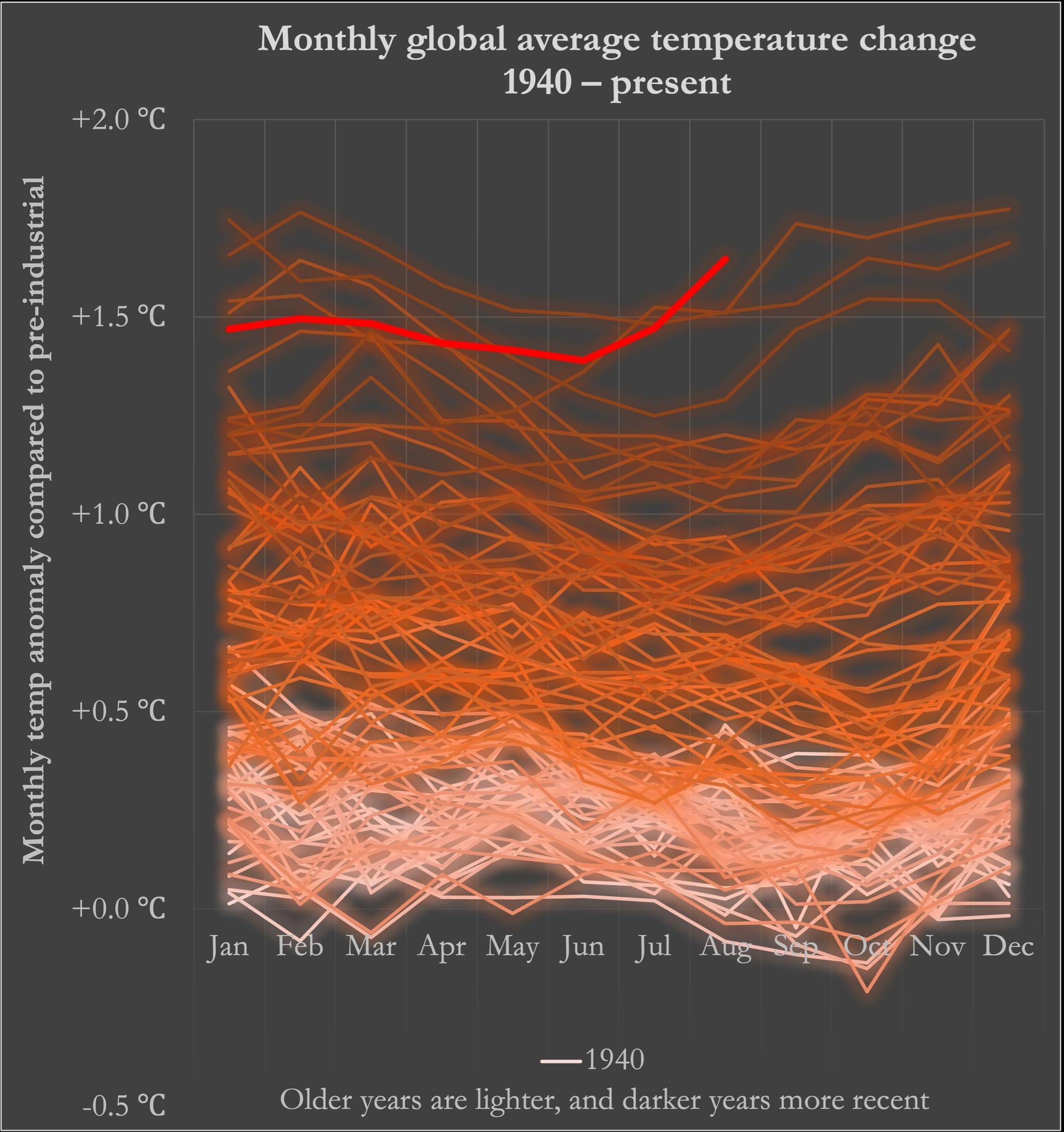
The world has failed to limit the global average temperature increases to 1.5C, bad things to follow—that was the thrust of the latest United Nations Environment Programme (UNEP) report. In some respects, this aspect of the document was a formality. Those who followed the politics of climate change, let alone the science, have long known where humanity was heading months ago. The date was already there.
What this means is not great. Even under the best-case scenarios, the world is destined to lock in average global temperature increases of 1.8C. As one of the world's largest gas and coal exporters, Australia holds its share of responsibility for the damage that will be done—and the climate politics this is creating have lead to some interesting moments over the last fortnight. For a start, the UNEP report dropped as Prime Minister Anthony Albanese was in Palau to prepare the ground for a series of pre-COP meetings coming up in October. Most reporting from this visit seemed to focus on the celebrity aspect. Where were all the world leaders, reporters asked? What was the point in getting involved in diplomacy when the most powerful people on the planet won't come to your party? Was Australia getting good return on investment here?
Australia is perhaps unique in that there is an entire strand of isolationism motivated entirely by penny pinching, but the framing of these critiques has been disappointing insofar as they uncritically recycle attack lines from a right-wing Coalition. The Coalition, it bears worth repeating, has pledged to dismantle any architecture that allows Australia to address climate change, even as One Nation nips at its heals. One Nation itself goes even further to deny the reality of climate change and wanting to pull Australia out of the United Nations. Both these positions make any fundamental critic from bother quarters largely irrelevant and mean reporters miss the broader point. The bigger story, largely ignored, was the Trump-like insistence by Anthony Albanese that Australia's approach to climate change was entirely consistent and sensible, without contradiction or criticism from Australia's Pacific neighbours. Here are the lines:
"Australia is highly regarded when it comes to climate change, and the talking down of Australia does not happen from outside Australia," Albanese said. "I'll make that point. The Pacific Leaders have respect for the position that we've taken, and they also understand with the transition, because they're dealing with it as well, that the transition can't happen overnight, that it requires strategies and policies to be put in place.
"And one of the things that renewables requires is firming capacity, and gas has a role to play in firming capacity. We've made that position very clear, and people understand that that is the circumstance."
To anyone who had spent any time around the dispiriting world of multilateral diplomacy and international engagement on climate change, this was obvious bunk. Australia is not "highly regarded". Its reputation is poor and has been for a long time. I can say this based on the conversations I have had being in these spaces: Australia is regarded as a rich, penny-pinching, navel-gazing country that says one thing, does another and is absolutely terrified it may be held liable for ongoing fossil fuel production even as it continues to expand its capacity in this area. One former Australian official once described Australia's reputation on climate change in the Pacific to me, bluntly: "They hate us. They think we lie." Whether or not elected leaders of these countries vent this frustration in public, or even in private negotiations with Australia, is another matter.
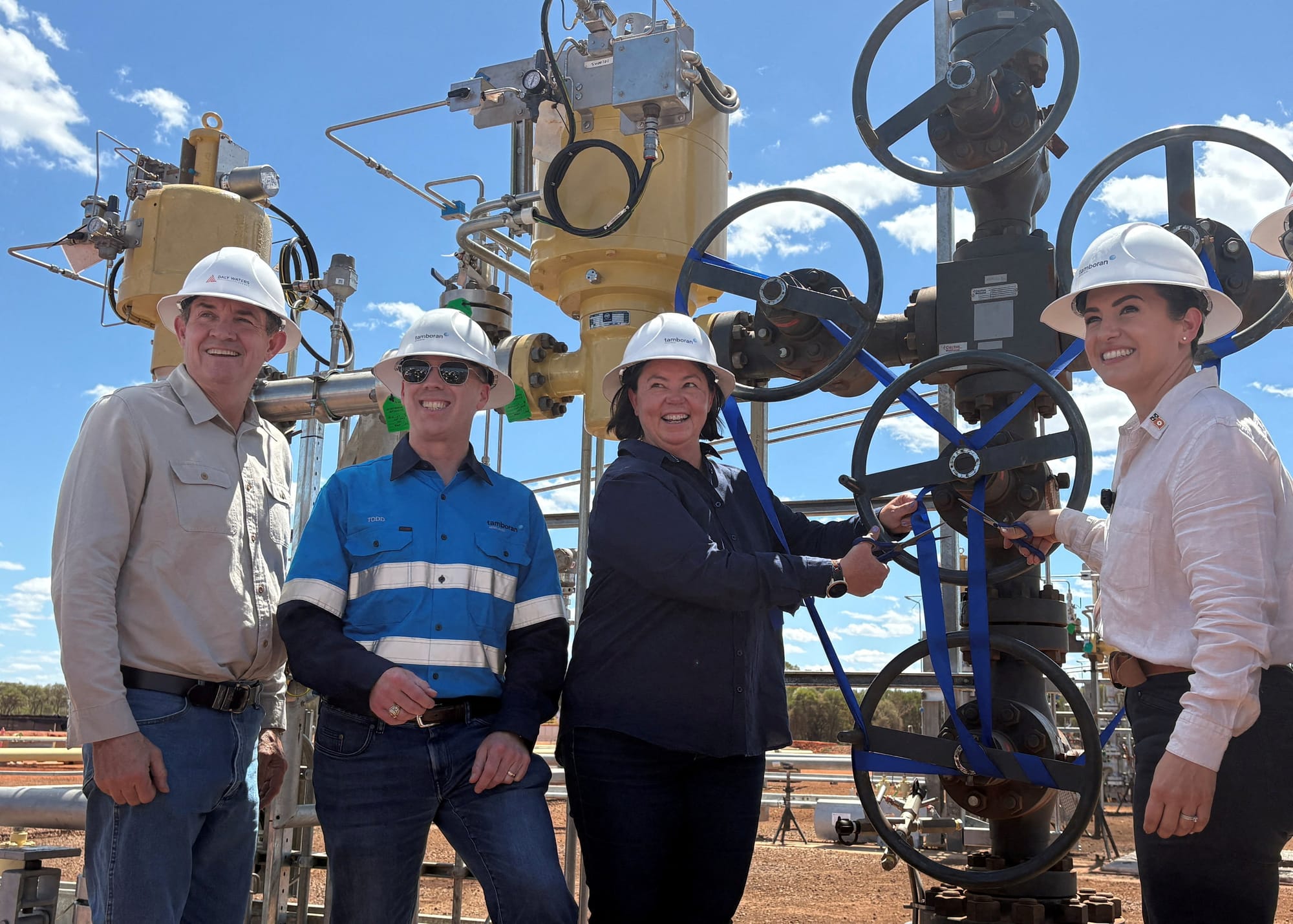
Albanese and his advisors know this, just as they know Australian lawyers tried to argue before the International Court of Justice that its obligation to address climate change were limited as part of a failed effort to contain its liability—and how a year on, the government still refuses to talk about what that may mean. They would also be aware there is a growing gap between thought and action on climate change. For every speech about how Australia is a force for good in the world, there is another headline about a new coal mine or gas development—which happened when Albanese was in Palau talking about how good we are on climate change. Not only did Albanese's brand new federal Environmental Protection Agency extend the life of another coal mine, but his Industry Minister, Madeleine King, posed for a photo-op next turning the valve on a pipeline that would deliver gas from a pilot project in Beetaloo Basin.
Adam Morton in The Guardian and Michael Mazengarb in Tempests and Terawatts have already done the legwork on the technical and policy reasons why this is all so egregious. What this sets up, however, is an interesting political dynamic going forward. If the purpose of a thing is what it does, Australia keeps showing by action that it thinks climate change is someone else's problem. It continues to expand its capacity to produce oil, gas and coal at a time when it is increasingly clear that a managed phaseout of fossil fuels is pressing. The question is how much these pressures will feed into its position as current co-host of COP32 in Antayla, Turkey in November, a role that places Australia and Climate Minister Chris Bowen in a precarious position. Australian officials, at all levels, may have quietly breathed a sigh of relief when Australia failed in its bid to host the meeting in Adelaide, but the participation trophy it received may set it up as a patsy if the negotiations fail.
There is already a early signs that things may be heading in that direction. Australia's domestic focus to date has been on the "holy trinity" of solar, batteries and electric vehicles as a low-cost, high impact, market-driven strategy to drive the energy transition. In its capacity as co-host for negotiations, Australia's rhetoric so far makes it appear as if the plan is to bring this approach to the global stage. The reality is, however, that dealing with climate change requires much more and it is not clear Australian political leaders have the appetite to carry out a managed phaseout away from oil, gas and coal at home, let alone champion the issue globally. In this way the Australian government is trapped by their terror at a right-wing reaction at home, and their obligations to the globe. It is hard to see how characteristic Australian "pragmatism" and the lowering of expectations will satisfy anyone in Turkey. Australia has refused to publicly acknowledge the ICJAO decision and has yet to show it has the capacity to navigate questions around finance and the ongoing fight to get the COP-process to consistently acknowledge the role of fossil fuels in driving climate change.
These sorts of questions will have to be addressed or they will continue to feed into the crisis of legitimacy facing the COP process. There is the potential for some of these contradictions, at least within Australia's own backyard, to come to a head in Fiji in October, with some sort of blow-out or confrontation as Pacific leaders demand Australia do more. Though unlikely, the circumstances suggest the chances are not zero: on the one hand, Pacific countries are heavily reliant on Australian foreign aid and support which they do not want to risk; on the other, China is making a play for influence in the Pacific that may make some leaderships more bold. Events to-date suggests proceedings will be fairly stage-managed, meaning that the five-day pre-COP meeting (including a trip to Tuvalu) will likely pass without incident. Whatever happens, it is looking increasingly like I may be actually on hand to witness in October, in which case, I will keep you posted.
Good Reads
Because we here at Raising Hell know how much you love homework…
- David Hollingshead in The Defector has a provocative essay on how the attack against the humanities for the quality of their writing is stupid. Though I might disagree in parts, I certainly agree that the basic approach to be taken in the face of bad faith attacks by reactionary idiots should be: 'me on my worst day is still better than you at your best.'
- Rishika Paradikar has been covering the awful destruction in Nepal and has a good summary in Drilled of what people need to know as far as climate change is concerned.
- Aditya Chakrabotty writing in the The Guardian UK spoke to some former car workers about why their neighbours might back Nigel Farage's Reform. Though I am suspicious of this genre, or any analysis of the broader reactionary movement, it rhymes with the subject of my first book, The Death of Holden and speaks to how people won't defend a society if they feel they have no stake in it.
- Ketan Joshi unpacked Anthony Albanese's repetition of the claim that "we can't phase out fossil fuels overnight" as a climate delay talking point in this great video.
 Ketan Joshi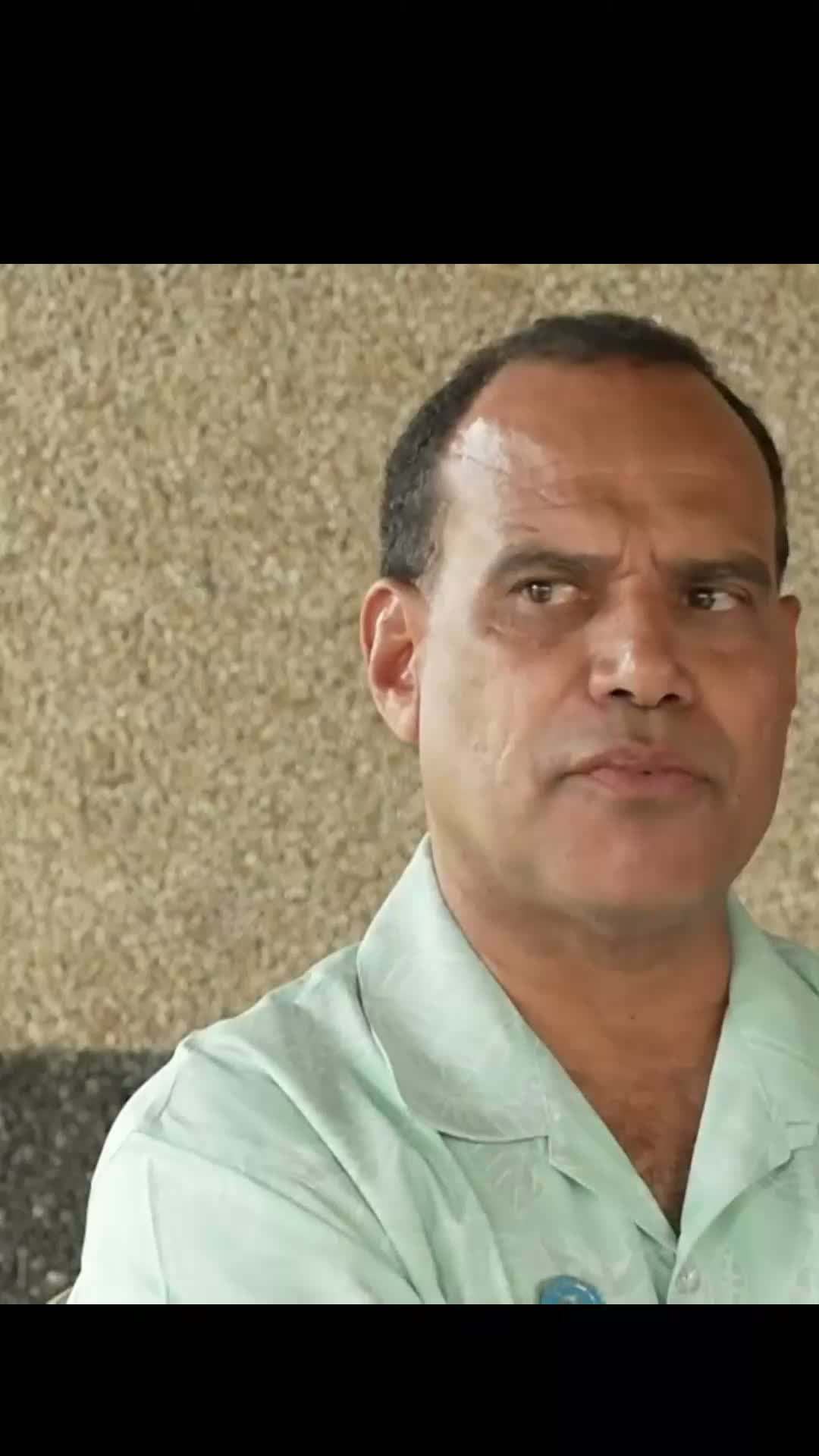
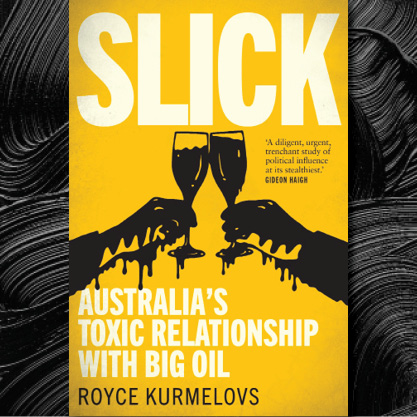
"Many books about climate change are worthy but dull. Slick, however, is as readable as it is shocking." - Richard Denniss, The Australia Institute, writing in The Conversation.
Reporting In
Where I recap what I’ve been doing this last fortnight so you know I’m not just using your money to stimulate the local economy …
- ‘The government just gave Deloitte to help with tobacco crackdown, despite...' (Deepcut, 3 September 2026).
- 'New Zealand to Become First Country in the World to Lock the Courthouse Door on Climate Change' (Drilled, 26 August 2026).
- Save the Date!
- 17 October 2026: I'll be hosting at session, Outlawed: The Rise of Sovereign Citizen Ideology, at Old Parliament House in Canberra on the Saturday. Get your tickets here.
- 18 October 2026: I'll be hosting another session, Wave of One Nation about (what else) the growing support for Pauline Hanson and friends. Get your tickets here.
- 28 October 2026: I have a new essay, Means, Motive and Opportunity, out through The Australia Institute's Vantage Point series that you can pick up wherever books are sold, like this one. Here's the blurb to whet your whistle:
A generation of Australians was told that action on climate change would wreck the economy.
A generation of Australians was told that action on climate change would wreck the economy. What Australians weren't told was that this message came from oil, gas and coal producers, and it was laundered into Australian Government policy via a little-known government agency.
With the forensic attention of true crime narratives, journalist and author Royce Kurmelovs traces the hidden history of how an obscure research bureau came to debase Australian climate policy for decades. Once a training ground for economists and public servants, funding cuts in the early neoliberal era saw it turn to industry money and transform into an engine for climate delay. As Australia grapples with worsening fires and floods, Kurmelovs shows the long-reaching and wide-ranging effects of institutional capture and the importance of integrity in the public service.
Before You Go (Go)…
- Want to get in touch? Message me on Signal at username RoyceK.11. Alternatively you can send hard copies to: PO Box 134, Welland SA 5007
- And if you’ve come this far, consider supporting me further by picking up one of my books, leaving a review or by just telling a friend about Raising Hell!