Issue 112: The Fiji Trip
"I was not proud of what I had learned but I never doubted that it was worth knowing." - Hunter S Thompson, The Rum Diary.

By the time the opening speeches were done, many pretty words had been said but two were missing: "fossil fuels". Standing at the podium in the comfortable embrace of the Sheraton, there were bold statements about the necessity of action, the grave threat posed by climate change, especially to low-lying countries in the Pacific, and the importance of patient, collegial diplomacy on matters of shared interest had been accentuate.
"I'm very confident that COP 31 will be remembered as one in which, in a difficult environment, the world took a forward step," Chris Bowen said. "That, in a difficult environment, the world said multilateralism matters more than ever before. And in a difficult environment, a region which has not had its voices heard like the Pacific, has had its voices heard."
It was all beautiful sentiment, but perhaps short of the mark. In the months leading up to this moment, Australian government officials have reportedly been briefing that Australia's direct involvement in the COP process meant it will finally to start to speak clearly on climate change. This, ostensibly, had be driven in part by agitation from the Pacific. For years now, the Pacific countries have been making clear what they want, and by this point these demands are well understood: an explicit commitment by developed countries to phase out oil, gas and coal, and meaningful action by those same countries to make good on past promises to, finally, help finance the transition in developing countries so they might leap-frog fossil fuels.
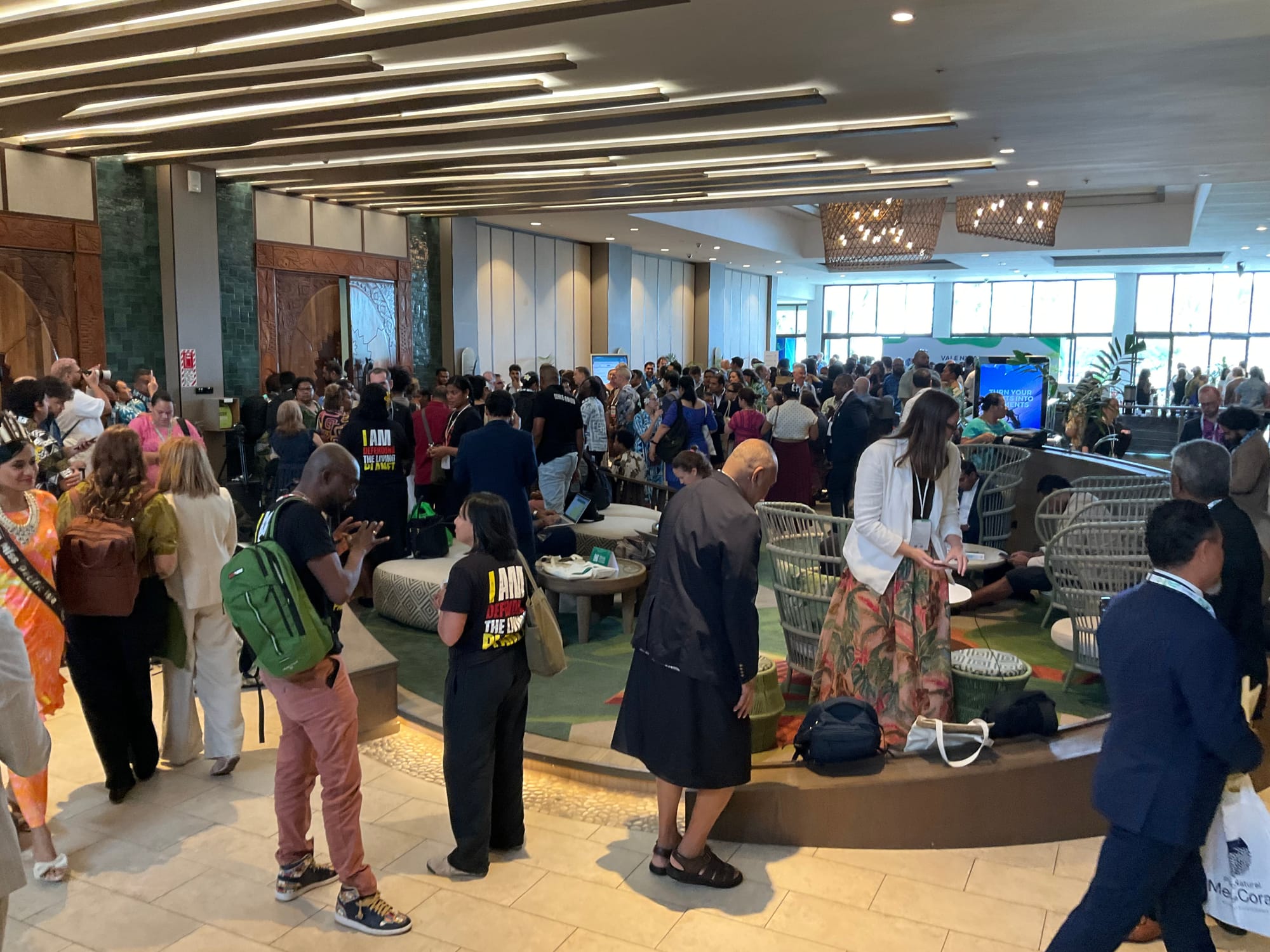
There was every indication pre-COP in Fiji on Monday morning would never get explicit about these things. Instead, as the opening leaders plenary went on, the process seemed to follow the very Australian practice of 'climate hushing': don't talk directly about what you are doing directly, talk around it. Be pragmatic and sensible. Chalk up enough wins on the belief that, before anyone knows it, the world has changed.
None of this changed how this was spectacle marked a long-anticipated moment for Australia and it's Pacific neighbours. As far as the Australian media have been concerned, however, it has all been a lot of meh. The Murdoch papers largely covered the weeks leading up to this moment with the usual framing, implying this was all some big talk-fest for cashed-up NGO's and tree huggers in a premier holiday destination. Even institutions like the ABC have treated the whole thing like a party whose success or failure depends on which celebrities turn up. When Chris Bowen appeared on ABC Breakfast on Monday morning from Fiji, the first question he was asked by host Sally Sara was the only one Australian media have been asking this whole time: where were the world leaders? Australia might be about to give a lifetime extension to the largest coal mine in New South Wales and keeps turning the tap on new gas extraction, but apparently the big issue was apparently whether Burnham and Xi and Vova might turn up in Fiji.
"I think it's important to know that Pre-COP is normally a pretty pedestrian affair, to be frank with you," Bowen said. "We've sought to elevate the importance of Pre-COP to really lift Pacific voices in the lead up to COP31 and to focus on the sorts of things that are at stake in our region, including going to Tuvalu, where the sea levels have risen already by around 15 centimetres over the last three decades. And the capital, Funafuti, is likely to be submerged at a high tide by 2035 unless serious action is taken."
It was a valiant effort by Bowen to taper down expectations and redirect the question around what mattered. It was also one that hasn't worked to date—and probably won't work going forward, given he had initially pegged expectations high—judging from Sara's second question: how much was this all costing the Australian taxpayer given world leader's weren't turning up?
Bowen was, for what it's worth, right. Historically speaking, pre-COP meetings haven't been significant affairs, even if they are generally regarded as the event where the agenda for COP-proper (The "Big Cop"?) is set. This time, though, there were additional factors that made the spectacle more interesting. The global architecture that underpins climate diplomacy has, traditionally, been a largely northern hemisphere affair. If you look at the recent sequence of hosting nations—Turkey, Brazil, Azerbaijan and the United Arab Emirates—something of a pattern emerges. Not are all these major oil and gas producing states, but the majority of these, with the exception of Brazil, are clustered within a certain geographic region.
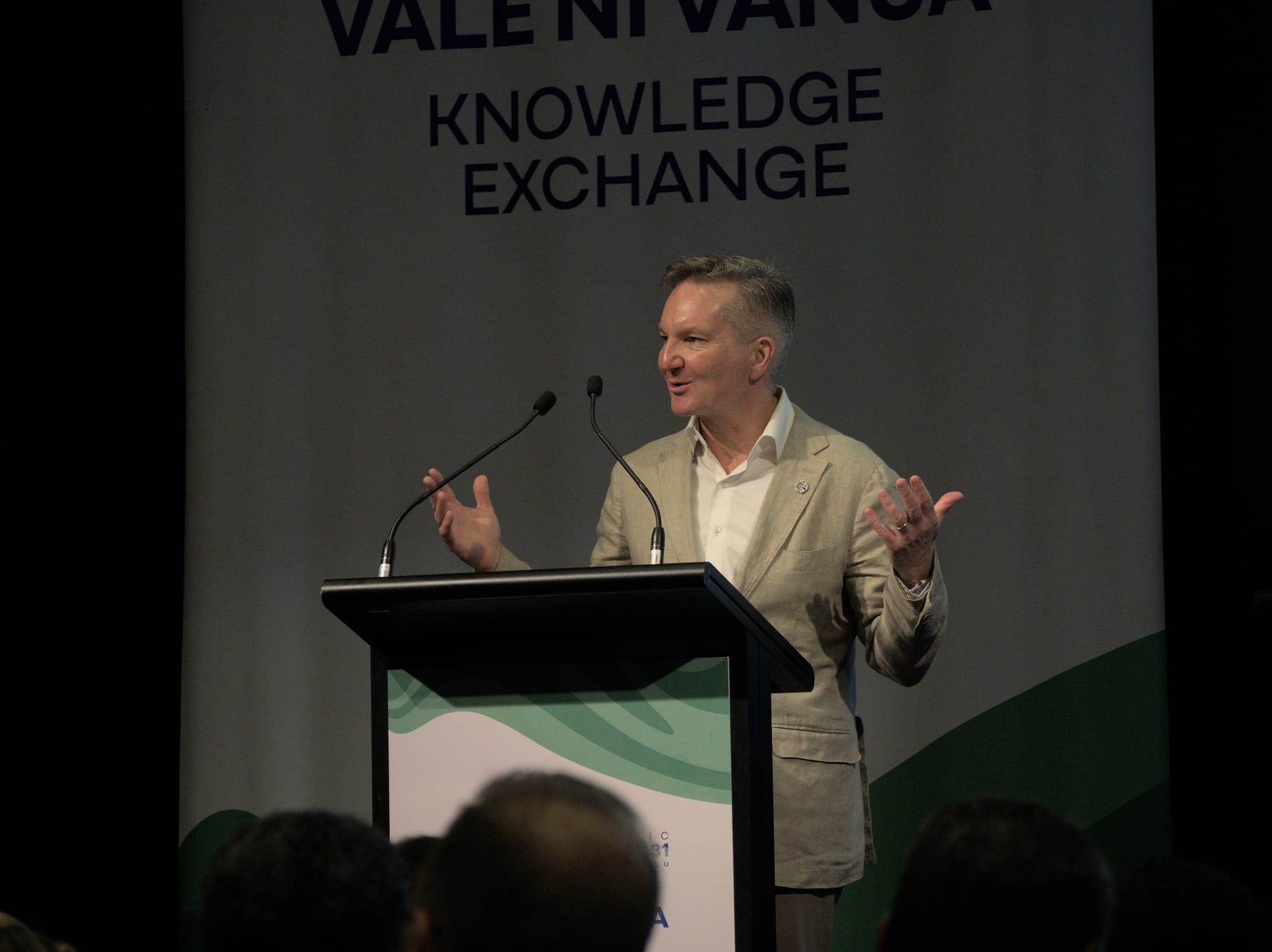
Australia's bid to host COP31 in Adelaide in partnership with the Pacific would have seen this apparatus move due south (in the metaphorical sense, with apologies to Brazil), but it was not to be. Depending on who you trust, Australia either straight-up failed, or did not try very hard, to lock down that opportunity—though the Australian government itself would disagree. The official position right up until the bitter end was that "negotiations remain ongoing", even as Bloomberg reported the result and the Turkish delegation office could be overheard celebrating.
Pre-COP was the consolation prize to the Pacific and Pacific countries have since done what they always have within the boundaries set on their officials by the straitjacket of Australia foreign aid: take the opportunity and run with it. Here on the ground, there are 4000 people expected to attend the little COP in Nadi, and 133 programmed events. The Fijian people have largely taken to their role as hosts. They have been welcoming of the curious foreigners who have washed up on their doorstep and taken them in with good humour. After all, this is their party and they are going to show their visitors a good time.
Fiji cultural victory.
— Royce Kurmelovs (@roycerk2.bsky.social) 2026-10-04T22:56:52.883Z
So far, Pacifika delegates remain firm in their demand that the world plan a managed phaseout oil, gas and coal, even where their elected officials may be more circumspect. For its part, Australia announced a $7.9m program on Monday after to help Vanuatu install more renewables that will leapfrog fossil fuels. On Tuesday, Australian Prime Minister Anthony Albanese will drop in for his moment in the spotlight. The plane leaving at 4am on Tuesday morning, local time, bound for Tuvalu with a gaggle of "senior people" was originally conceived on the basis that a visit to the drowning island may galvanise global support for action. That probably would have made a good story to witness, but even if the lack of attendance means Albanese will more or less be showing The Pacific the Pacific.
I would have liked to have been there to make the cut, but unfortunately seats available to media were limited to a select few. So as those events take place elsewhere, I'll be around to watch the curious spectacle unfold from on the ground as part of a future dispatch for Drilled as a prelude to Antayla, and you know how much I enjoy a spectacle.
Good Reads
Because we here at Raising Hell know how much you love homework…
- Please enjoy this dispatch from the dying days of Victor Orban's illiberal paradise in Hungary by Brian Goodman writing in The Drift.
- The Washington Monthly had an interesting story by Kainoa Lowman who spoke people in the renewable energy industry to ask why they aren't fighting harder against the Trump administration. The quotes in the piece do a good job of illustrating how the industry has no idea what it's doing, even as Republicans consistently line up behind their oil, gas and coal industry donors at every single opportunity. This total lack of fight, or at the very least, base survival instinct, is very much replicated here in Australia.
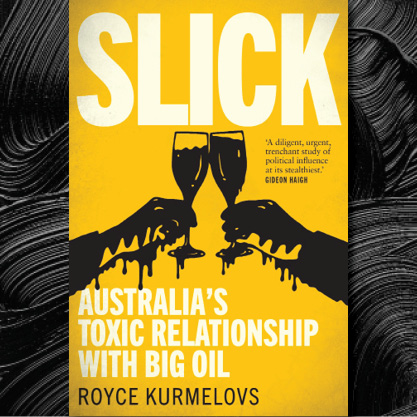
"Many books about climate change are worthy but dull. Slick, however, is as readable as it is shocking." - Richard Denniss, The Australia Institute, writing in The Conversation.
Reporting In
Where I recap what I’ve been doing this last fortnight so you know I’m not just using your money to stimulate the local economy …
- Save the Date!
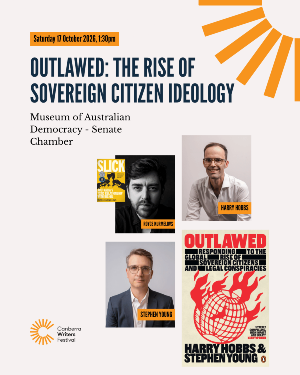
- 17 October 2026: I'll be hosting at session, Outlawed: The Rise of Sovereign Citizen Ideology, at Old Parliament House in Canberra on the Saturday. Get your tickets here.
- 18 October 2026: I'll be hosting another session, Wave of One Nation about (what else) the growing support for Pauline Hanson and friends. Get your tickets here.
- 28 October 2026: I have a new essay, Means, Motive and Opportunity, out through The Australia Institute's Vantage Point series. Pre-orders and sales in the first couple of weeks help make or break a project. Get yours here.
- February 2027!: I'll have ANOTHER essay out with Monash University Press looking at One Nation. Stay tuned for more.
Before You Go (Go)…
- Want to get in touch? Message me on Signal at username RoyceK.11. Alternatively you can send hard copies to: PO Box 134, Welland SA 5007
- And if you’ve come this far, consider supporting me further by picking up one of my books, leaving a review or by just telling a friend about Raising Hell!